Finding Hope in the Chaos

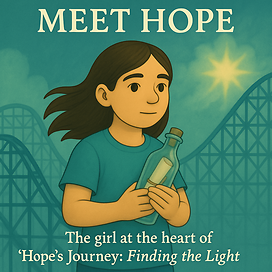
For as long as I can remember, I lived on a roller coaster that no one else seemed to ride. My emotions didn’t move in gentle waves like the other kids around me — they rose in blinding highs and crashed in devastating lows. Even as a little girl, something inside me felt different, louder, heavier, faster. But every time I tried to explain it, I was shut down. I was told I was “too dramatic,” “too sensitive,” “too hormonal,” “too much.” My feelings were dismissed so quickly that eventually I learned to bury them. Silence felt safer than truth, even though the truth was screaming inside me.
Highs and lows in childhood
By childhood, the darkness had already begun. I didn’t have the vocabulary to call it suicidal thoughts, but I knew I didn’t want to feel the way I felt. I knew something was terribly wrong. I would spiral into lows so deep I couldn’t imagine a way out, and then swing into highs that felt exhilarating and terrifying at the same time. I tried to send out signals — quiet pleas, nervous confessions, moments where I hoped someone would notice how much I was hurting — but every message was brushed away. My parents pushed me aside with phrases like “you’re just emotional,” “you’re dramatic,” or “you’re overreacting.” My pain was invisible because no one cared enough to look.
Finding help for mental health
When I turned 19 and finally had control over my own decisions, I tried to get help. I walked into doctor after doctor hoping someone would finally understand. Instead, I was misdiagnosed over and over again: major depression, anxiety disorder, stress, overwhelm. Not one provider questioned the intensity of my episodes. Not one asked why antidepressants made my suicidal thoughts stronger. Not one listened when I tried to explain the racing thoughts, the pressured energy, or the emotional crashes that left me unable to breathe.
Battling suicidal thoughts
So I survived my twenties in survival mode. I battled extreme suicidality at times that no one around me even knew about. I held myself together with coping skills I invented out of desperation. I hid the mornings I didn’t want to wake up. I forced myself through days where my brain felt like a storm I couldn’t escape. I kept going because some tiny, stubborn part of me refused to give up — even when the darkness tried to swallow me whole.
Everything finally changed when I was 32.
Finally receiving a bipolar 2 diagnosis
After more than a decade of being unheard and untreated, I found a doctor who didn’t brush me off. She listened — really listened — to every detail of my history. She didn’t rush me, didn’t minimize me, didn’t blame my personality. She asked questions no one had ever cared enough to ask. She connected the patterns, the cycles, the symptoms, the suicidal episodes, the highs that weren’t happiness but pressure.
And then she said the words that changed everything:
“You have Bipolar II — and based on your history, you’ve had it since you were eight years old.”
Eight years old.
A child.
A little girl who was drowning in emotions too big for her body while the adults around her dismissed every sign.
Hearing that broke something open inside me — not pain, but validation.
For the first time in my entire life, everything made sense.
I wasn’t dramatic.
I wasn’t unstable.
I wasn’t imagining it.
I wasn’t failing.
I wasn’t weak.
I wasn’t “too much.”
I was bipolar.
I had always been bipolar.
And no one saw it.
I am a survivor
That diagnosis didn’t scare me — it saved me. It gave me a map for the first time. A language. A direction. A chance to finally treat what had been controlling my life since childhood. The woman I might’ve been if someone recognized it at eight… I’ll never know. But the woman I’ve become because of everything I survived — that woman is strong, resilient, and finally understood.
Getting the correct diagnosis didn’t just change my life.
It gave me purpose.
Becoming a mental health advocate
I became a patient leader, a patient ambassador, and a mental health advocate because I refuse to let anyone else grow up unheard the way I did. I speak out because silence almost killed me more times than I’ll ever admit. I share my truth because so many people are still living in the dark, misdiagnosed or untreated, wondering why they feel broken when they’re not.
And the most humbling part is knowing that my story has helped others find their own. That people have told me they saw themselves in my words. That they sought help because my journey made them feel less alone. That hearing my truth gave them the strength to keep going — sometimes even the strength to stay alive.
There is no greater honor than that.
You are not alone
I didn’t learn what I was fighting until I was 32, but now I use every year before that to fight for someone else. If you’re reading this and carrying your own invisible storm, I want you to know:
Your pain is real.
Your experiences make sense.
Your suicidal thoughts do not make you weak — they mean you’re suffering and deserve help.
You deserve to be heard.
You deserve answers.
You deserve life.
You are not alone on this roller coaster.
You never were.
And you never have to ride it in silence again.